When we look at the world around us, we gather information in two main ways: by observing and by inferring.
An observation is something you can directly notice using your senses (see, hear, smell, taste, or touch) or measure with a tool. Observations are based on clear evidence. For example: “The goat is standing by the hay,” or “The goat is chewing.” These statements describe exactly what can be seen or measured, without adding extra meaning.
An inference is a conclusion or explanation you make based on your observations and what you already know. For example: “The goat is hungry.” You cannot directly see hunger, but you use clues (like the goat eating) to make a reasonable guess.
A simple way to tell them apart is to ask:
- Can I directly see or measure this? If yes, it’s an observation.
- Am I explaining or guessing what it means? If yes, it’s an inference.
Another helpful tip is to look for clues in the language:
- Observations often describe what is happening.
- Inferences often explain why something is happening or what might happen next.
Being able to tell the difference helps you think more clearly, make better decisions, and support your ideas with evidence.
Let’s practice telling observations and inferences apart using the image below. Mark whether each statement is an observation or an inference.
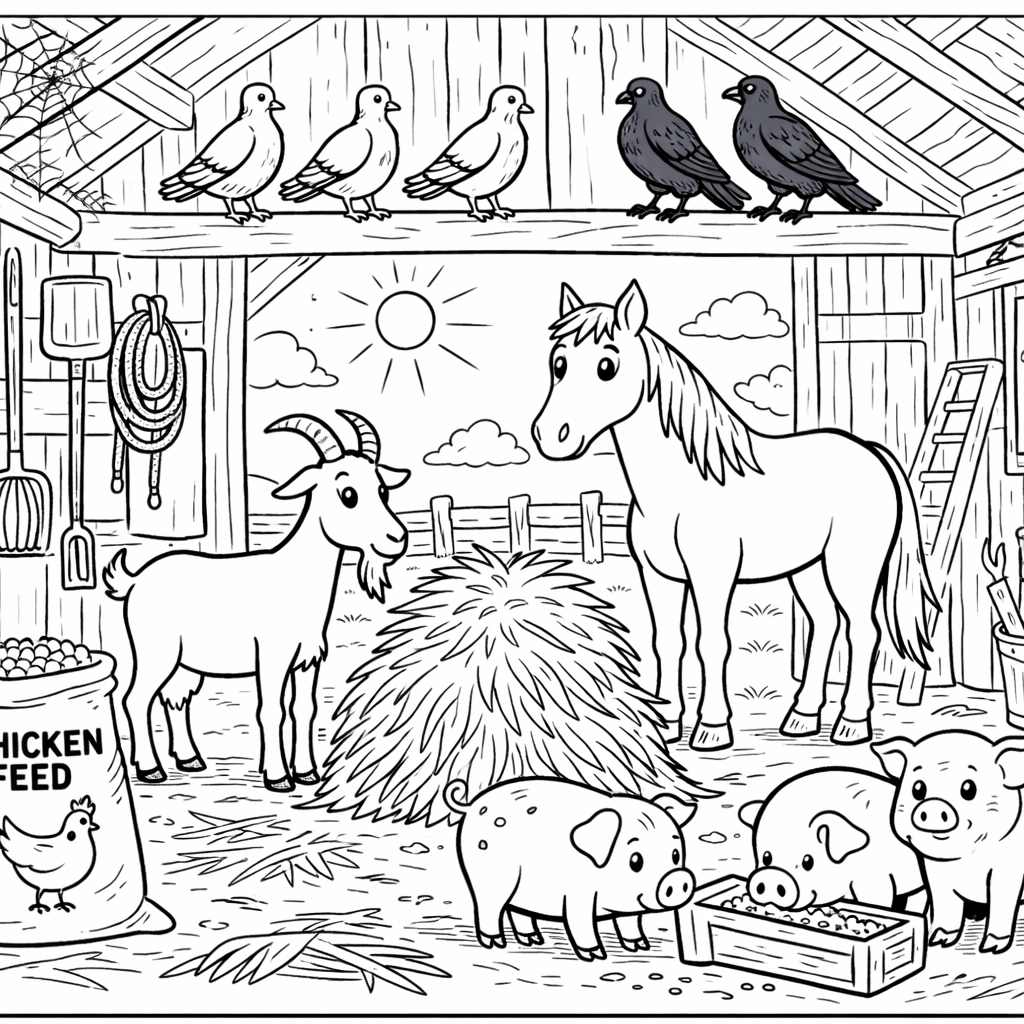
- There are five birds.
- The horse is hungry.
- The pigs have four legs.
- It’s daytime in this picture.
- It’s summertime.
- The shovel belongs to the farmer.
- The pigs are healthy.
- There’s rope hanging on the wall.
- The goat likes the horse.
- A ladder is leaning against the wall.
Bonus Question: If an observation is wrong, is it still an observation? For example, would it be an observation if somebody said that there are hawks in the barn’s rafters?


Leave a Reply